Monday - Saturday
10 a.m. - 5 p.m.
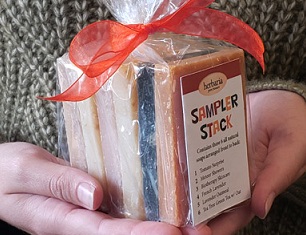
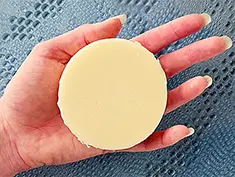
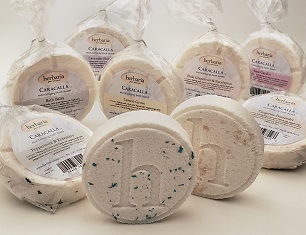
 Burano Laundry Soap
Frequently Asked Questions
General
- Why are your soaps better?
- How can I justify paying $6.49 for a bar of soap when supermarket bars are just a few dollars?
- How do Herbaria soaps compare with Dove, for instance?
- How long will a bar last in my shower or bath?
Selection
- With so many choices, how do I choose the one bar I really like?
- Which Herbaria soaps are the most moisturizing?
- What's the best bar for sensitive skin?
Ingredients
- How do you make your soaps, and what is superfatting?
- Are your soaps vegetarian/vegan?
- Why do you scent only with essential oils?
- What do I smell when I walk into your shop?
- Are essential oils dangerous to pets?
- Why no linen, jasmine, or cucumber scents?
- Why do you put oatmeal in your soaps?
- Do your soaps contain phthalates?
- I have read that the palm oil industry has had some devastating effects on tropical forests in Indonesia and the orangutan populations there. Do you know where your palm oil comes from?
- Are your soaps gluten-free?
- Are essential oils safe for me during pregnancy and breastfeeding?
Other
- Why don’t you make liquid soap?
- Won't your soaps leave soap scum?
- Don't I need antibacterial soap to wash off germs?
- How long is the shelf life of your soap?
- What is the pH of your soap?
- Do I need persimmon soap to get rid of "old person smell?"
- Can you round the edges of your soap?
- Will Herbaria soap melt in a hot car?
Answers
Why are your soaps better?
Our bars are not harsh, petroleum-derived detergents but real soap. Furthermore, we use no faux fragrance oils. All of our scents come from essential oils obtained from plants.
How can I justify paying $6.95 for a bar of soap when bars at the supermarket are just a few dollars?
That supermarket bar has hidden costs. It likely contains detergents and other harmful ingredients. Here's what a Herbaria customer told us:
"I have been in a lifelong battle with eczema, hives, and chronic dry skin. After countless trips to dermatologists and purchases of immunosuppressants, steroids, and OTC creams, it turns out I'm allergic to detergent! So, in fact, is my five-year-old daughter."
Think about what this woman paid in medical bills, time, and aggravation. The soap you choose is no trivial matter. Research has shown that eczema can lead to asthma, cases of which have increased significantly since the 1970s. That period also includes the rise of body washes. To prevent eczema, experts recommend avoiding detergent "soaps" and synthetic fragrances.
Bottom line: A family of four can purchase a year's supply of Herbaria soap for $271.05, enough for each to use a bar a month. Pay for 39 bars and get 9 free with our special offer. That's $67.76 per person per year.
Not a family of four? A single person who orders a year's supply, a bar per month, will pay $69.50 with free shipping.
How do Herbaria soaps compare with Dove, for instance?
We believe, and our customers agree, that Herbaria soaps are kinder to your skin. Ours are more moisturizing, smell better, and last longer than mass-produced bars.
We’re proud to say our soaps contain only vegetable oils and other plant-based, food-grade ingredients. By contrast, Dove contains petroleum derivatives, preservatives, and artificial fragrances.
Herbaria Lavender Oatmeal |
Dove “White Beauty Bar” |
|
How long will a bar last in my shower or bath?
Customers are amazed at how long our bars last. There are several reasons why.
- Composition: the blend of oils we use ensures durability. Our bars will consistently and considerably outlast brand-name soaps.
- Size: Herbaria bars start off weighing a generous 4.5 ounces. Over time they lose moisture, but in the process, they become harder and more long-lasting.
- Handling: Most of our customers understand the importance of letting soap dry out between uses. Choose a soap dish that keeps your bars out of puddles and allows air to circulate around them. Beware of ersatz soap dishes that collect water under your bars.
With so many choices, how do I choose the one bar I really like?
We guarantee all of our soaps will please you. Choose the scents you like. Some people want the same variety all the time. Some prefer bar hopping.
Which Herbaria soaps are the most moisturizing?
All of our soaps are moisturizing. Every bar begins with our proprietary blend of vegetable oils excellent for skin care. Every variety except Old Fashioned Lye Soap is superfatted. That means we add extra emollients, such as shea butter, almond oil, and cocoa butter, to further soften and soothe your skin.
What's the best bar for sensitive skin?
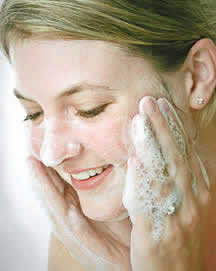
We've gotten great feedback on our Lavender Oatmeal. Some have even claimed that it cleared up their eczema and psoriasis. Another soap to try is LaRee's Scent Free. Consider this, though: your sensitive skin issues may be related to unnatural ingredients prevalent in ordinary soaps, shampoos, and detergents. For that reason, you may find that you can enjoy any of our natural bars.
How do you make your soaps, and what is superfatting?
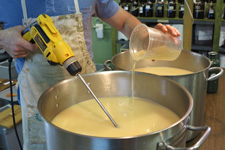
We handcraft our soaps the old-fashioned way, called cold process soap making. We use lye, a strong base, to convert the fatty acids in vegetable oils to soap. The lye is neutralized in this process, and none remains in the finished soap. A beneficial by-product of the natural soap-making process is glycerin, a terrific skin softener. It makes up about 9% of each bar. In a step called superfatting, we stir in additional moisturizing emollients, such as shea butter or hemp seed oil. Essential oils are added for scent. We often add plants such as oats or seaweed for texture and color.
Are your soaps vegetarian/vegan?
Our soaps are vegan.
We make no milk soaps or honey soaps. All Herbaria soaps contain only food-grade vegetable oils and sustainable plant materials.
In contrast, Procter & Gamble started up in Cincinnati because that was where the stockyards were located. Indeed, even today, most commercial "soaps" (they are actually detergents), are made using animal fats. Dove ingredients include "sodium tallowate," tallow, or animal fat.
Though we may not be certifiably halal or kosher, we can assure you that our soaps are 100% vegetable-based.
Why do you scent only with essential oils?
It’s not just that they smell better. Essential oils are markedly different from synthetic fragrance oils regularly used in most soaps and scented candles.
Take lavender, for example. It has been loved and associated with bathing and cleanliness for centuries. Our bodies still make a straightforward, deep, healthy connection with it.
Just a dozen molecules of imitation lavender can trick your nose into thinking you’re smelling lavender. But real lavender has more than 5,000 molecular compounds. It’s a botanical treasure full of healthy phytonutrients—esters, lactones, ketones, and phenols. Real lavender is also non-toxic, non-irritating, and non-sensitizing.
The many essential oils we add to our soaps are prized in aromatherapy. We also use essential oils therapeutically as deodorants, antimicrobials, and astringents. The essential oils in our Camper's Choice bar repel insects.
What do I smell when I walk into your shop?
Why no linen, jasmine or cucumber scents?
The easiest to consider are synthetic scents such as "linen" or "strawberry" or "cucumber." These come from chemically fabricated fragrance oils containing up to 3,000 chemicals. Fragrance oils may even create new odors not found in nature. While many of these fragrance oils may smell good enough, Herbaria is committed to providing you with all-natural products.
Jasmine and rose are used strictly for fine perfumes. We can buy these natural scents, but at over a thousand dollars a pound, they are prohibitively costly for soap. The expense comes from harvesting many thousands of blossoms. It takes more than one hundred pounds of rose flowers to produce a single ounce of attar of roses. On the other hand, lavender essential oil is made from the entire lavender plant, easier to harvest by the acre.
Furthermore, we avoid certain essential oils, such as rosewood and agarwood, because they come from endangered plants. We are committed to using only responsibly-harvested ingredients.
Why do you put oatmeal in your soaps?
As an exfoliant, oatmeal scrubs your skin and removes dead cells. Finely ground oatmeal binds moisturizing emollients to your skin so that it is softer and more elastic. That’s called "colloidal action." Oatmeal also soothes and reduces redness, itching, and minor skin irritations.
See all soaps containing oatmeal.
Do your soaps contain phthalates?
Absolutely not. We’ve read some horrifying studies of how phthalates, commonly found in synthetic fragrances, adversely mimic human hormones. Here’s a summary of just one reported by the Campaign for Safe Cosmetics:
"Long-term studies suggest that phthalates can cause harm to the genitals of baby boys during prenatal development by reducing normal levels of sex hormones. Additionally, some phthalates are associated with poor sperm quality and infertility in adult men.
"Some female laboratory animals exposed to phthalates experienced alterations in sex hormones and fetal loss. Phthalates have also been shown to cause proliferation of breast tumor cells and to make anti-estrogen treatments, such as tamoxifen, less effective against tumors."
I have read that the palm oil industry has had some devastating effects on Indonesia's tropical forests and orangutan populations there. Do you know where your palm oil comes from?
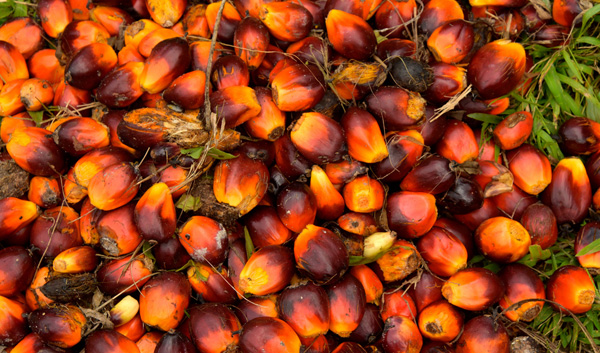
Herbaria takes extra care to purchase ingredients and supplies from sources that promote environmental sustainability, social and economic justice. The palm kernel we use is certified by the Rountable on Sustainable Palm Oil (RSPO). In the December 2018 issue of National Geographic, the author states, "Boycotting palm oil is unwise: Alternative oil crops would swallow even more land...They (the oil palm trees) require only half as much land as other crops, such as soybeans, to generate a given amount of oil."
Our supplier adds:
"Our palm fruit and palm kernel oil are from South America, grown in a region of the Amazon that was cleared by previous owners 30-40 years ago. The reestablishment of a forest crop has brought back many species of birds and other plants and animals. While not as diverse as native rainforest, it is a vast improvement over grasslands. We are conscious of where we purchase our oils and will continue to seek conscious growers and producers."
Are your soaps gluten-free?
The only concern you may have with our products is those which contain oats. Oats are inherently gluten-free but may have come into contact with gluten during transportation or while in storage. We clearly state which soaps contain oatmeal.
Are essential oils safe for me during pregnancy and breastfeeding?
Some essential oils may not be safe during pregnancy and breastfeeding. Warning lists vary as to what oils to avoid. Concentrations in applications matter make a difference. For instance, using a bar of our soap is not the same as putting essential oils directly on skin. Consult your healthcare provider.
Why don’t you make liquid soap?
We know that many of you enjoy the convenience of liquid soap, but it simply cannot be as healthy for you as our bar soaps. We suspect liquid soaps, often harsh and drying, may account for the increase in many skin problems today.
Most liquid "soaps" are not soap at all, but a lot of water mixed with detergents, imitation fragrances, preservatives, and clarifiers. Additionally, emulsifiers and stabilizers allow the product to pass through the pump and eliminate the need to shake the bottle every time you use it.
Big companies aggressively market liquid soaps because they make big profits selling them. You pay a lot mostly for water and a showy plastic bottle.
Won't your soaps leave soap scum?
We hope you aren’t choosing your soap based on how clean it leaves your bathtub. Yes, real soap leaves a natural residue on bathroom surfaces. It slight and easily cleaned unless you let it build up. However, it cleans off fairly easily.
Body soap products that claim not to leave a residue are most likely detergents with a slew of questionable additives. We prefer to keep petrochemicals off our skin.
Don't I need antibacterial soap to wash off germs?
Germs are certainly a concern. What kind of soap do you need to protect against disease?
A Federal Drug Administration study concluded that "mass-marketed antiseptics have shown no evidence of preventing infections more effectively than hand washing with regular soap." Adding antibacterial chemicals to soap does not improve the protection of your health.
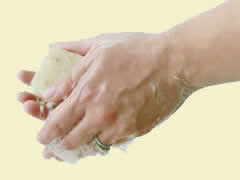
Simply washing your hands with good old-fashioned soap and water rids your skin of about 99.9% of all fungi, bacteria, and viruses.
Anti-bacterial soaps, whether bars or liquids, make claims that cannot be realized with typical hand washing. Anti-bacterial agents, such as triclosan, must remain on the skin in contact with bacteria for about two full minutes. Most of us do not take that much time washing our hands. Furthermore, in no case will anti-bacterial agents work against viruses. In every case, they will deposit contaminants into our rivers, streams, and groundwater. We at Herbaria object to that effect.
Scientists also suspect that long-term exposure to chemically formulated anti-bacterial agents may actually cause the opposite reaction: resistance by the bacteria.
And don’t forget that many of the bacteria present on our skin are not unhealthy. For example, they may fight harmful, aggressive bacteria.
We recommend a good, sudsy hand wash and shower with any of our Herbaria soaps as the best way to support your skin’s natural role against disease-related germs.
How long is the shelf life of your soap?
Our soaps last a long time, even without preservatives. Paraben, used in many other soaps to extend shelf life, is thought to be carcinogenic.
We have bars from 2002 that lather and clean just fine. Those old bars are solid. They last almost forever in the shower.
How long will the scents last? The more powerful essential oils, like lavender and eucalyptus, are quite enduring. In our shop, we have a couple of patchouli bars from our early days and they are still fragrant. Lighter scents such as grapefruit or almond fade more quickly, in a year or so. However, the loss of scent is only from the surface. Use the bar and the scent will emerge.
What about those pretty colors? Some varieties, exposed to bright sunlight, can show signs of fading in as little as several hours. On the flip side, other varieties may retain their full color for years. Those with no added color, such as Lavender Oatmeal, won’t change at all.
What is the pH of your soap?
A chemist tested our soap and found that, dissolved in distilled water, the pH was 8.5. The bar itself measured 9 pH. Neutral pH is 7. The chemist who tested our soap was quite impressed. He said we make an "extremely mild" product. He remembered his grandmother's soap testing at pH 14.
Do I need persimmon soap to get rid of "old person smell?"
If you're over 60, you've likely been targeted by ads for persimmon soap. Persimmon soap is purported to be necessary to remove the oils that cause the "old person smell," called 2-nonenol. The simple truth is that our soaps remove oils effectively, even 2-nonenol.
When bathing, be sure to wash thoroughly, with a washcloth or loofah, especially your chest, neck, and behind your ears.
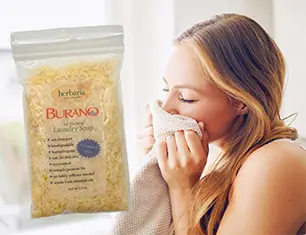
If you're washing clothes or linens with our Burano Laundry Soap, we suggest adding half a cup of vinegar or lemon juice, plus half a cup of baking soda to your wash. That will help break down lingering oils in fabrics and keep everything smelling fresh.
Can you round the edges of your soap?
Because our goal is to make soap you can afford to enjoy and use every day, we don't form Herbaria bars in individual molds. We hand-cut a large block of soap into bars. To trim the twelve edges on each bar (count 'em) would add a lot of extra labor and expense. You'll notice, though, that the soap begins to round out after the first shower. If you like, bevel the edges of each new bar with a vegetable peeler.
Back to topWill Herbaria soap melt in a hot car?
The answer is absolutely not. We make our soap using the cold process method. Your car would have to reach temperatures over 200° for bars to even soften. There are some soaps out there, not ours, made by what's called "melt and pour." These are ready-made soap mixtures sold at hobby stores that can be melted down, scented, colored, and poured into molds. "Melt and pour" bars melt at temperatures from 115 to 150 degrees.
Back to top